

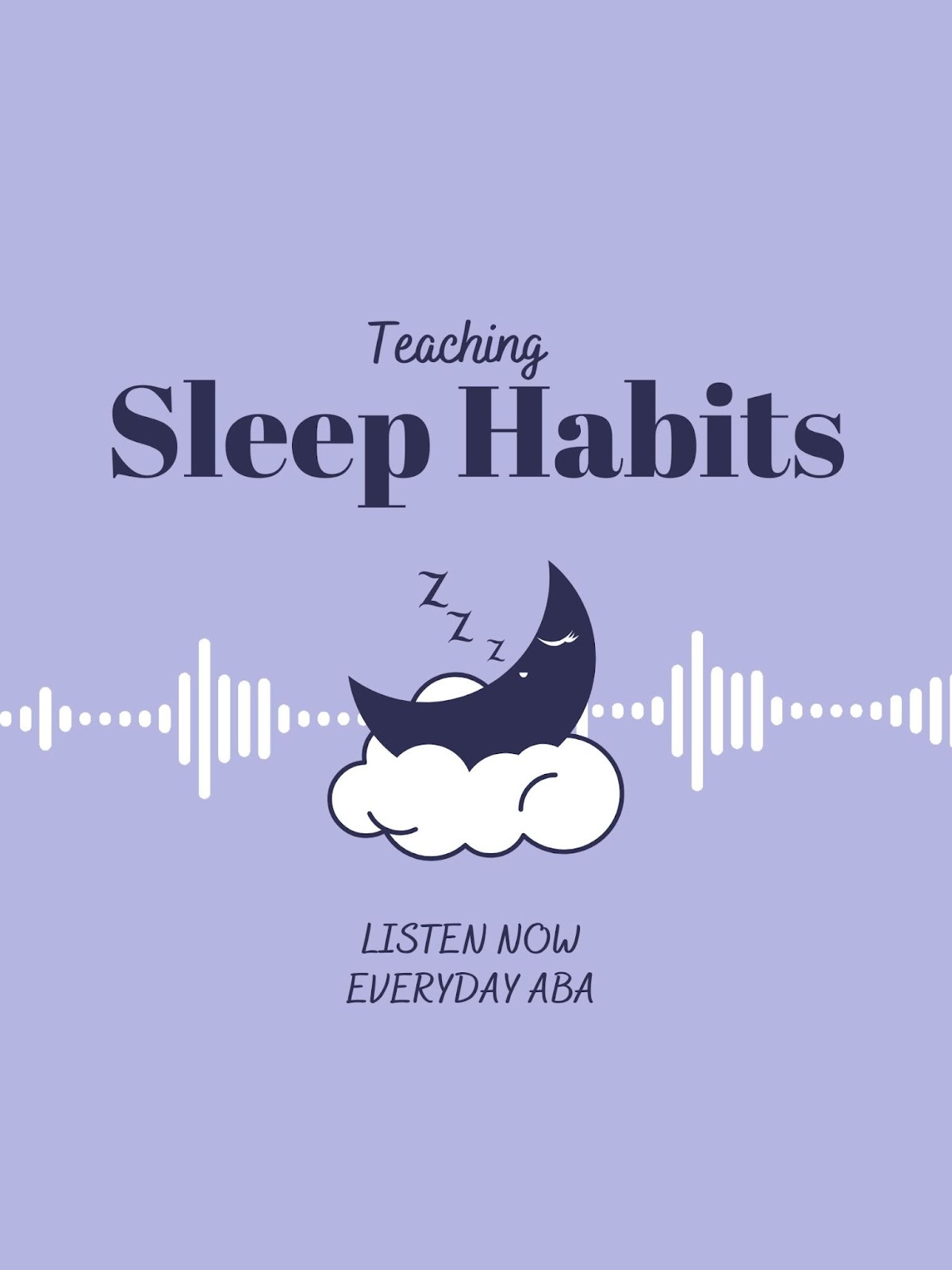
In this episode of EveryDay ABA, hosts Paola, Leslie, and Brittanny explore one of adulthood’s most frustrating challenges: sleep-onset insomnia. Drawing from evidence-based strategies in Applied Behavior Analysis (ABA), the episode examines how faulty reinforcement patterns, mismatched stimulus control, and poor sleep hygiene can disrupt healthy sleep routines. The hosts guide you through behavioral sleep training techniques, the use of successive approximations to reshape sleep behaviors, and the importance of making the bed a discriminative stimulus (SD) for sleep—not a place for snacking or scrolling. Designed for parents, practitioners, and anyone tired of being tired, this episode offers practical, research-backed tools grounded in CBT-I, stimulus control theory, and ABA interventions.
After listening to the episode listeners will know how to:
- Define sleep-onset insomnia and know how to distinguish it from general fatigue or biological sleep disorders.
- Describe how poor stimulus control contributes to insomnia, particularly when incompatible behaviors are reinforced in the sleep environment.
- Implement self-monitoring strategies to increase behavioral awareness and promote habit change.
References:
Bootzin, R. R. (1972). Stimulus control treatment for insomnia. Proceedings of the American Psychological Association, 7, 395–396.
Cooper, J. O., Heron, T. E., & Heward, W. L. (2020). Applied behavior analysis (3rd ed.). Pearson.
Espie, C. A. (2002). Insomnia: Conceptual issues in the development, persistence, and treatment of sleep disorder in adults. Annual Review of Psychology, 53, 215–243.
Kazdin, A. E. (2011). Behavior modification in applied settings (7th ed.). Waveland Press.
Two code words are required, then you will be redirected to complete CEU information after payment.
Reviews
There are no reviews yet.